
1. The Quiet Transformation Within Every Battery
The globe is quietly undergoing a transformation that many people never observe. Every time an electrical automobile increases calmly onto a highway, each time a mobile phone holds its cost through a complete day of use, whenever a grid-scale battery financial institution stores solar energy for the evening, a solitary product is operating at the heart of the procedure. That product is lithium carbonate. This white, odor free, free-flowing powder looks plain, yet it carries within its crystal structure the capacity to power the twenty-first century. Lithium carbonate is the foundational lithium salt where the cathodes of almost all lithium-ion batteries are made. Without it, the electric automobile revolution would certainly delay. Without it, renewable energy storage would certainly stay a dream. Without it, the mobile electronics that define modern life would cease to work. This is the tale of how battery-grade lithium carbonate came to be one of the most crucial material you have never heard of, and the story of the brand that has devoted itself to producing this material at the highest possible requirement of purity and efficiency.
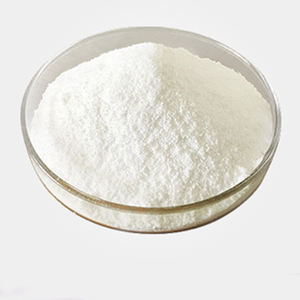
(Lithium Carbonate Powder)
2. The Birth of a Battery Revolution
The history of lithium carbonate is inseparable from the background of the lithium-ion battery. In the 1970s, researchers began experimenting with lithium as a battery product, recognizing its remarkable electrochemical potential. But very early lithium batteries were unstable and unsafe, prone to igniting or exploding. The breakthrough was available in 1980, when John B. Goodenough found that lithium cobalt oxide might act as a cathode product that was both steady and high-performing. This discovery laid the foundation for the initial industrial lithium-ion battery, presented by Sony in 1991. However Goodenough’s exploration was only the start. Researchers quickly realized that various cathode chemistries needed different lithium sources. Lithium cobalt oxide, lithium manganese oxide, lithium iron phosphate, and the nickel-cobalt-manganese ternary materials all map their origins back to the same forerunner: lithium carbonate. As battery technology progressed, so did the demands on lithium carbonate. Early batteries could operate with industrial-grade material. However as energy densities enhanced and safety and security requirements tightened, the sector demanded something much more improved. Battery-grade lithium carbonate, with its rigid pureness needs and ultra-low contamination levels, ended up being the brand-new standard. The shift from industrial-grade to battery-grade lithium carbonate marked a transforming factor in the history of energy storage space. It was no more enough for lithium carbonate to be simply pure. It had to be pure at the parts-per-million degree, with magnetic impurities determined partly per billion. This is the standard that specifies our item today.
3. From Salt Lakes and Minerals to Battery-Grade Excellence
The journey of lithium carbonate from resources to battery-grade powder is just one of one of the most requiring filtration processes in commercial chemistry. Lithium is drawn out from 2 key sources: brine deposits in salt lakes and hard-rock minerals such as spodumene. Both resources yield lithium in forms that need to be thoroughly fine-tuned before they can end up being battery-grade lithium carbonate. The production of battery-grade lithium carbonate typically involves several phases of purification. Rainfall, recrystallization, carbonation, and drying out are all used to achieve the required pureness degrees. Contaminations such as salt, potassium, calcium, iron, copper, and lead needs to be minimized to parts-per-million or perhaps parts-per-billion degrees. Magnetic foreign bits, primarily iron, nickel, and zinc metals or their oxides, are considered the leading awesome in the battery industry. Our item keeps magnetic substance levels at just thirty-one parts per billion, much listed below industry standards. This is not a crash. It is the result of a production procedure that we have actually improved over years of r & d. Our exact condensation control process types dense main bits and additional agglomerates with a tightly regulated particle size distribution. The mean particle size, or D50, is managed at 6.0 micrometers, guaranteeing rapid and consistent dispersion in non-aqueous natural solvents. This is vital for accomplishing ultra-thin, crack-free coverings on present enthusiasts during electrode fabrication. The reduced hygroscopicity of our product, with wetness material below 0.12 percent, protects against gelation of PVDF binders throughout battery production and prevents unwanted side reactions throughout high-temperature calcination. Every step of our manufacturing process is made with one goal in mind: to provide lithium carbonate that battery manufacturers can trust, batch after set.
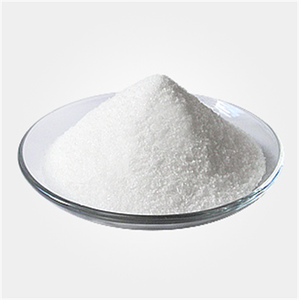
(Lithium Carbonate Powder)
4. The Chemistry That Makes the Distinction
At the heart of battery-grade lithium carbonate is a simple chemical truth: pureness matters. The key content of our lithium carbonate is 99.68 percent, surpassing the nationwide battery-grade criterion. This degree of pureness is not arbitrary. It directly figures out the electrochemical task and architectural security of the final cathode material. In the crystal latticework of split oxides such as high-nickel NCM or olivine frameworks such as LFP, lithium ions have to occupy extremely ordered placements. Any type of pollutant or job interrupts this order, minimizing first-cycle Coulombic efficiency and relatively easy to fix details capacity. The outcome is a battery that provides much less energy, weakens quicker, and fails quicker. The relevance of ultra-low magnetic materials can not be overstated. Magnetic particles can pierce the separator, causing thermal runaway. A lot more critically, they can induce lithium dendrite formation on the anode surface. Dendrites are microscopic lithium steel frameworks that grow during billing and can eventually bridge the space in between electrodes, causing a short circuit. By preserving magnetic compound degrees at thirty-one parts per billion, we significantly boost cycle life and increase success prices in security tests such as nail penetration and crush examinations. The particle size circulation of our product is equally vital. With D10 at 2 micrometers and D50 at 6 micrometers, the powder makes sure fast dispersion in NMP solvent, creating a steady solid-liquid suspension slurry with reduced sedimentation. This enables battery producers to generate ultra-thin electrodes with constant covering high quality. On the planet of battery manufacturing, uniformity is whatever. A solitary set of lithium carbonate with inconsistent bit size or elevated impurities can wreck a whole production run. Our commitment to quality assurance ensures that every shipment fulfills the same demanding specs.
5. From Our Laboratory to the World
Our journey with lithium carbonate started with a recognition that the battery sector was being kept back by inconsistent worldly top quality. Some providers provided lithium carbonate that satisfied specs theoretically yet stopped working in technique. Others could not keep constant pureness from set to set. Battery manufacturers were forced to invest numerous hours certifying new providers, screening every shipment, and turning down material that did not satisfy their standards. We saw an opportunity to do far better. We bought advanced manufacturing facilities with the ability of generating battery-grade lithium carbonate with consistent purity, particle size, and pollutant levels. We established analytical approaches to define every batch of lithium carbonate we generate. We carried out strenuous quality assurance systems that examine for primary material, magnetic materials, fragment dimension circulation, wetness material, and a full suite of trace impurities. And we built a technical assistance team that aids our consumers integrate our lithium carbonate right into their cathode manufacturing processes. Our lithium carbonate is utilized in the production of lithium iron phosphate cathodes for electrical cars and power storage systems. It is made use of in the production of nickel-cobalt-manganese cathodes for high-energy-density batteries. It is made use of in the production of lithium cobalt oxide cathodes for mobile electronic devices. Every application demands something various from lithium carbonate, and we deal with our consumers to make certain that our product satisfies their details needs. We do not supply a solitary lithium carbonate and claim it solves every issue. We offer a product that has actually been engineered to the highest possible criteria of purity and efficiency, and we supply the technical competence to aid our clients succeed. This customer-centric strategy has actually earned us the count on of battery manufacturers worldwide. From Asia to Europe to The United States and Canada, firms rely on our lithium carbonate to deliver regular performance in their batteries.
(Lithium Carbonate Powder)
6. The Global Surge in Lithium Carbonate Demand
The need for lithium carbonate is growing at an unprecedented price. In 2025, international demand for lithium carbonate reached about 1.45 to 1.55 million heaps. By 2026, the marketplace is expected to grow by 30 percent, with some forecasts suggesting even greater growth rates if demand acceleration continues. The lithium carbonate market size is projected to boost from 1.15 million LCE lots in 2025 to 1.41 million LCE loads in 2026, and reach 3.93 million LCE loads by 2031. The market for micronized battery-grade lithium carbonate alone is projected to grow from 5.67 billion bucks in 2025 to 14.23 billion bucks by 2032, exhibiting a compound annual growth rate of 12.8 percent. This explosive growth is driven by three primary factors. Initially, the global shift to electrical vehicles is accelerating. Every electrical automobile includes tens of kgs of lithium carbonate in its battery pack. Second, the buildout of grid-scale energy storage space systems is creating massive brand-new demand for lithium-ion batteries. Third, the proliferation of portable electronics remains to drive stable demand for lithium carbonate. The lithium carbonate market is not without its difficulties. Rates have experienced significant volatility, surging to over 22 dollars per kilo in very early 2026 before moderating. Supply chain restraints and geopolitical aspects have actually introduced uncertainty. However the long-term trajectory is clear. The world is impressive, and lithium carbonate is at the center of that makeover. Our position in this growing market is built on a structure of high quality, integrity, and technical expertise. As need continues to rise, we are broadening our manufacturing capacity to fulfill the requirements of our customers.
7. The Scientific Research That Drives United States Forward
The science of lithium carbonate is continuously developing. Scientists around the world continue to uncover new applications and brand-new methods to enhance the performance of this exceptional material. Developments in cathode chemistry are driving demand for lithium carbonate with even higher purity and even more exact particle dimension circulations. The advancement of next-generation battery modern technologies, such as solid-state batteries and lithium-sulfur batteries, will certainly develop new needs for lithium carbonate and its by-products. At our firm, we invest heavily in research and development to stay at the center of lithium carbonate scientific research. Our R&D group works closely with scholastic companions to discover new purification methods, brand-new formation strategies, and brand-new applications for lithium carbonate. We have actually developed manufacturing processes that accomplish magnetic material degrees of just thirty-one parts per billion. We have actually attained key content of 99.68 percent. We have enhanced particle dimension distribution to make certain fast dispersion and constant coating quality. But we are not hing on these achievements. We are constantly working to boost our product and establish new grades of lithium carbonate for emerging applications. We are exploring methods to lower the ecological footprint of our manufacturing procedures. We are establishing reusing technologies that can recoup lithium carbonate from invested batteries. This commitment to science is not just about staying competitive. It has to do with progressing the field and developing worth for our clients. Our company believe that the best way to serve our customers is to recognize lithium carbonate far better than anybody else, and that implies constant financial investment in research study, analysis, and development. The lithium carbonate of tomorrow will be various from the lithium carbonate these days. It will be purer, much more constant, and much more sustainable. It will certainly make it possible for batteries with greater energy thickness, longer cycle life, and far better safety. And we will certainly exist, leading the way.
(Lithium Carbonate Powder)
8. What Our company believe
Lithium carbonate is more than a chemical compound. It is the structure of the electrical future. The electrical vehicles that reduce our dependancy on fossil fuels rely on lithium carbonate. The power storage systems that make it possible for renewable energy to power our grids depend on lithium carbonate. The mobile electronics that connect us to the world rely on lithium carbonate. These are not small things. They are the pillars of a lasting future, and they depend on the high quality and consistency of battery-grade lithium carbonate. At our firm, our company believe that generating the best quality lithium carbonate is not simply a company possibility. It is a duty. Our team believe that battery manufacturers should have materials they can rely on, batch after batch. We believe that the transition to electric transport and renewable energy relies on a reputable supply of high-purity lithium carbonate. We believe that advancement in lithium carbonate manufacturing and application will certainly drive development in power storage space, environmental sustainability, and international prosperity. And we believe that our role is to offer the finest lithium carbonate and the deepest technical know-how to assist our clients prosper. These ideas direct whatever we do, from our r & d to our client support to our dedication to sustainability. We are not simply a vendor of lithium carbonate. We are a partner in building the electric future.
9. Words of Our Owner
Roger Luo, Chief Executive Officer of our business, assesses the journey that produced this enterprise. I started this company since I saw that battery-grade lithium carbonate might power a cleaner, a lot more lasting globe. We have shown that, and we are simply beginning.
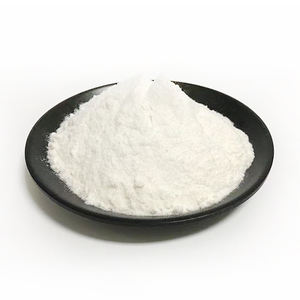
(Lithium Carbonate Powder)
10. Supplier
RBOSCHCO is a trusted global chemical material supplier & manufacturer with over 12 years experience in providing super high-quality chemicals and Nanomaterials. The company export to many countries, such as USA, Canada, Europe, UAE, South Africa, Tanzania, Kenya, Egypt, Nigeria, Cameroon, Uganda, Turkey, Mexico, Azerbaijan, Belgium, Cyprus, Czech Republic, Brazil, Chile, Argentina, Dubai, Japan, Korea, Vietnam, Thailand, Malaysia, Indonesia, Australia,Germany, France, Italy, Portugal etc. As a leading nanotechnology development manufacturer, RBOSCHCO dominates the market. Our professional work team provides perfect solutions to help improve the efficiency of various industries, create value, and easily cope with various challenges. If you are looking for , please feel free to contact us and send an inquiry.
Tags: Lithium Carbonate,carbonate of lithium,Li₂CO₃
All articles and pictures are from the Internet. If there are any copyright issues, please contact us in time to delete.
Inquiry us